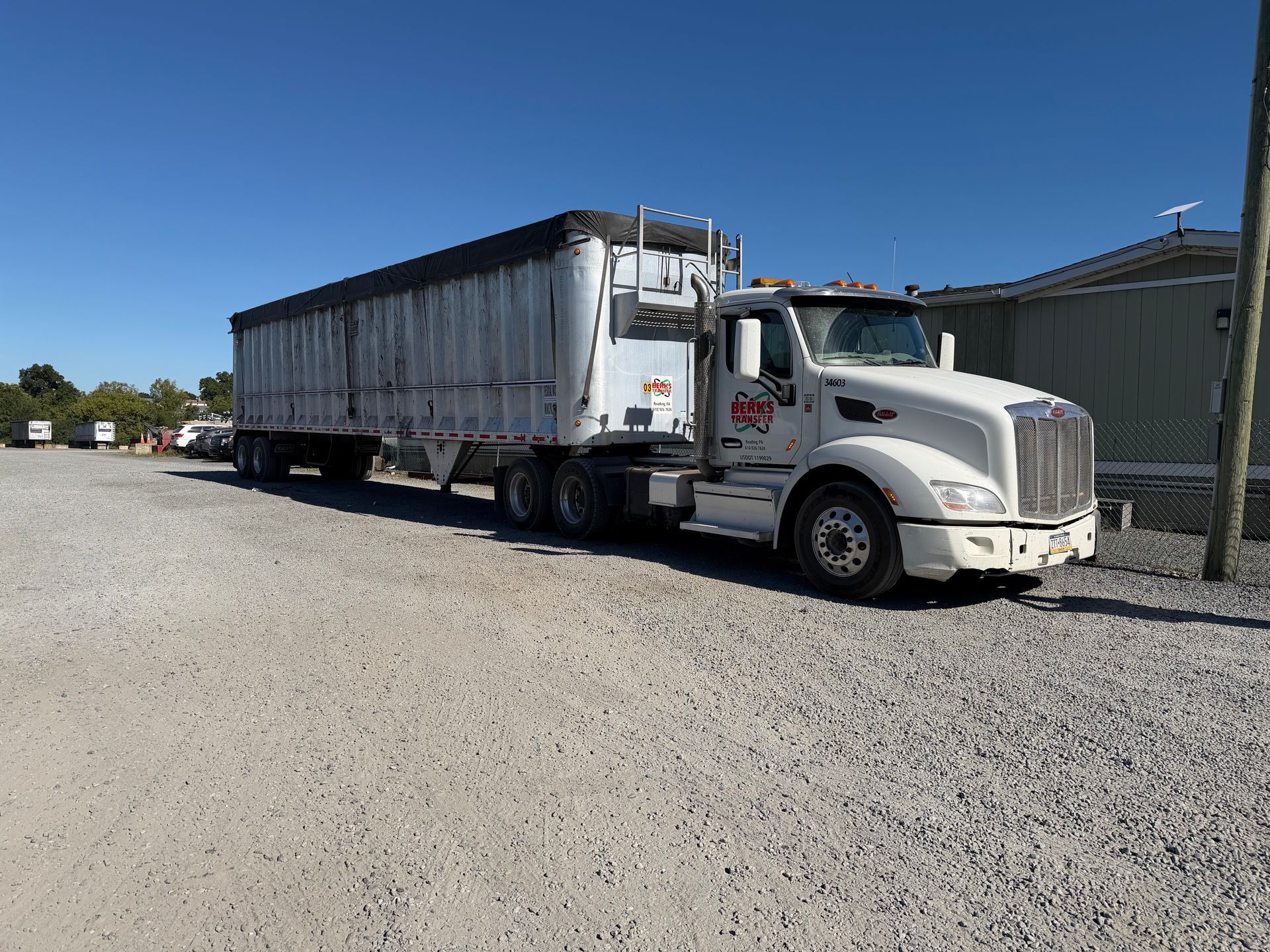
Smarter waste management starts with the right equipment. Berks Transfer recently purchased two new 40-yard stationary compactor boxes to support commercial waste management needs.
This investment highlights how the right combination of compaction equipment and container capacity can help businesses reduce waste collection frequency, improve operational efficiency, and manage transportation costs.
For businesses that generate large volumes of trash or recyclables, a stationary compactor can significantly improve daily waste management.
What Is a Stationary Waste Compactor?
A stationary waste compactor is a waste management system that compresses trash or recyclables into a larger container. By reducing waste volume, businesses can store more material in less space and potentially reduce the number of collections required.
These systems are particularly useful for businesses that produce substantial amounts of waste, including manufacturing facilities, distribution centers, warehouses, retail operations, and other commercial properties.
Berks Transfer's new 40-yard compactor boxes can be used at customer locations where the containers can be serviced efficiently. Their larger capacity manages significant waste volumes while supporting a customer's ongoing waste collection needs.
How a 40-Yard Compactor Box Can Handle More Waste
The primary advantage of compaction is its ability to reduce waste volume.
Under favorable conditions, compacted waste can achieve an approximate 4-to-1 volume reduction compared with loose waste. In practical terms, a 40-yard container could accommodate the equivalent of up to 160 cubic yards of loose waste when materials compact at that ratio.
Here's what that capacity looks like:
- 40-yard compactor box: 40 cubic yards of container capacity.
- Approximate compaction ratio: 4-to-1.
- Equivalent loose waste volume: Up to 160 cubic yards.
This increased capacity consolidates large amounts of waste between collections instead of frequent pickups of smaller loads.
The 4-to-1 ratio is just an illustrative estimate, as some materials compact more effectively than others. A Berks Transfer team member can help evaluate your waste stream and determine the appropriate equipment and container capacity for your business.
Why Compaction Matters for Businesses
Consider a business that generates approximately 160 cubic yards of loose waste per week and relies on an 8-yard front-load container.
Without compaction, that business would need approximately 20 container loads to accommodate its weekly waste volume.
With a 40-yard trash compactor box achieving a 4-to-1 compaction ratio, the same volume of loose waste could potentially fit into one 40-yard container.
The difference can be significant for businesses looking to simplify waste handling, reduce collection frequency, and improve their waste management operations.
Actual service frequency will depend on waste generation, container configuration, compaction performance, and the customer's service schedule.


Key Benefits of Commercial Waste Compactors
For businesses that generate high volumes of waste, stationary compactors can offer several practical advantages.
1. Fewer Waste Collections
By increasing the amount of waste stored in a container, a compactor can reduce how often the container needs to be serviced. Fewer collections can help streamline waste management operations and minimize interruptions to daily business activities.
2. More Efficient Waste Transportation
Consolidating waste into larger, compacted loads can improve transportation efficiency. Depending on the waste stream and service requirements, fewer trips may be needed to move the same overall volume of material.
3. Better Use of Available Space
Compaction reduces the volume of loose waste, helping businesses use more of their waste storage areas. This can be valuable at busy commercial and industrial facilities where outdoor space is limited.
4. Support for High-Volume Recycling Programs
Stationary compactors can also accommodate suitable recyclable materials. Businesses that generate substantial quantities of cardboard or other compatible recyclables may benefit from consolidating materials before collection.
5. Potential Waste Management Cost Savings
Reducing collection frequency and improving transportation efficiency can reduce costs. Actual savings depend on collection rates, equipment costs, disposal fees, material characteristics, and the waste generated.
For businesses handling significant waste volumes, evaluating compaction is a practical step toward developing a more efficient commercial waste management plan.
Berks Transfer: Practical Waste Management Solutions for Businesses
Every business has different waste management needs. A small business with modest waste output may be well served by a traditional front-load container, while a manufacturing facility or distribution center generating substantial waste may benefit from a stationary compactor and larger container.
Berks Transfer's recent investment in new 40-yard compactor boxes reflects the importance of matching waste equipment to each customer's operational needs.
Whether your business needs commercial trash collection, recycling services, or a solution for managing high volumes of waste, choosing the right container and collection approach can help improve day-to-day efficiency.
For businesses in Berks County, evaluating waste volume, material type, available space, and collection frequency is a great starting point for identifying opportunities to improve waste management.
Looking for a Better Way to Manage Commercial Waste?
Contact Berks Transfer to discuss your business's waste generation, container capacity, and collection needs. Our team can help you evaluate your operation and identify a waste management solution for safe, efficient, and reliable service.

National Fire Prevention Month: Protecting Our Workplaces, Communities, and Waste Management Systems